 By Siam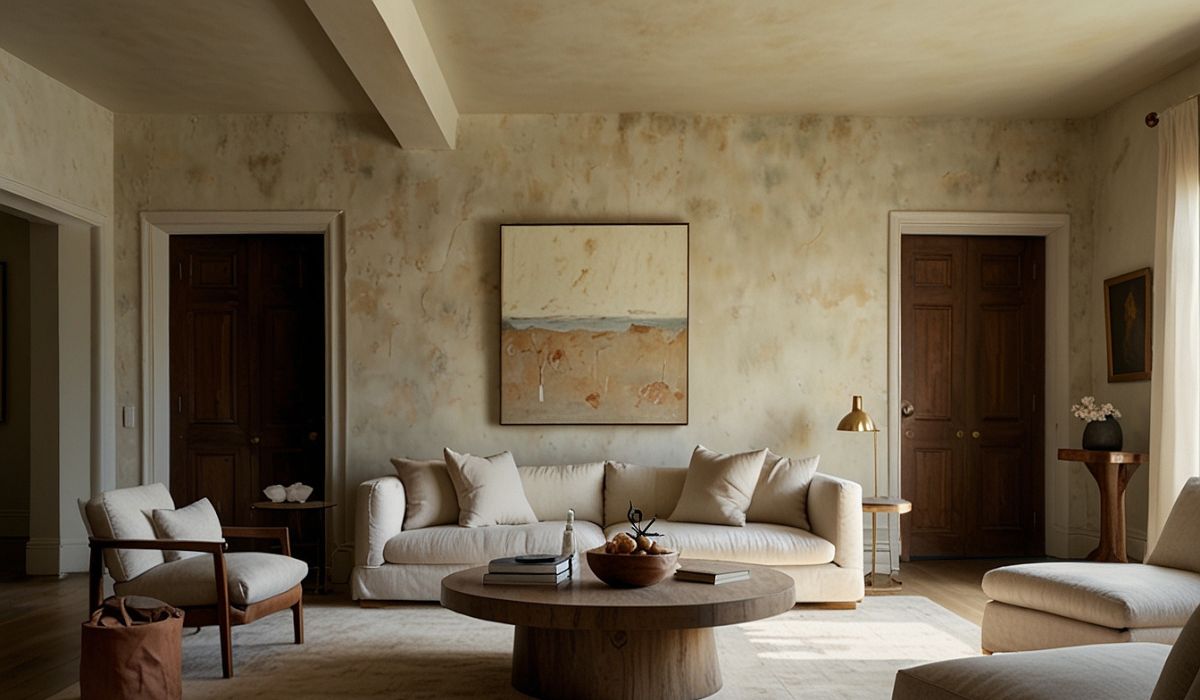
Have you ever run your hand over a wall that wasn’t just smooth, but had a soul? A surface that seemed to hold the light and the shadows in a gentle, textural embrace, telling a story of craft and patience without saying a word? Or perhaps you’ve felt a fabric that didn’t just look expensive, but felt profound—a quiet, tactile whisper against your skin.
This sensation, this entire aesthetic philosophy, has a name. It’s not shouted from the rooftops by trend forecasters; it’s murmured in the curated showrooms of Milan, woven into the collections of avant-garde designers, and painted onto the walls of the most serene, soul-nourishing homes. It’s called gessolini.
At its heart, gessolini isn’t just a trend. It’s a rebellion. In a world saturated with glossy finishes, screaming logos, and the frantic pace of fast-everything, gessolini is the deep, calming breath. It’s the aesthetic embodiment of “slow luxury.” It draws its core identity from the timeless beauty of plaster—think marmorino or limewash—translating its matte, mineral-rich, and subtly irregular character into everything from the clothes we wear to the spaces we inhabit.
But what does it truly mean to live a gessolini life? Let’s explore it.
If you just think of gessolini as “the beige trend,” you’re missing the forest for the trees. Honestly, that’s the most common misconception. The color palette is a consequence, not the cause. Gessolini is first and foremost a philosophy of material honesty.
It asks a simple but profound question: Why cover a beautiful, natural texture with a perfectly flat, synthetic finish? The answer, it seems, is that we’ve been craving a return to the authentic.
Here are the core pillars that define the gessolini sensibility:
This is the non-negotiable foundation. Gessolini is obsessed with how things feel. It’s about surfaces that invite touch. In interiors, this means walls that have a hand-troweled depth, fabrics with a nubbly, raw, or crinkled hand-feel, and objects that look like they were shaped by human hands, not injection-molded by a machine.
You’ll see this in:
- Wall Finishes: Venetian plaster, micro-cement, and clay paints.
- Textiles: Heavy, matte linen, raw silk, bouclé wool, and washed cotton.
- Materials: Unpolished stone, raw wood with visible grain, and forged metals.
The goal is to create a visual and tactile landscape that is rich and engaging, even within a monochromatic scheme.
The color story of gessolini flows directly from its material focus. We’re not talking about cold, sterile grays. We’re talking about the warm, complex neutrals found in nature.
Think:
- Off-whites that lean towards oyster, chalk, and ecru.
- Beiges that echo sand, stone, and raw plaster.
- Greys with warm undertones of taupe, brown, or green.
- Desaturated earthy tones like terracotta, ochre, and sage, all softened as if faded by the sun.
This palette is inherently calming and forgiving. It creates a backdrop that allows texture and form to take center stage.
This is where gessolini transcends aesthetics and becomes a lifestyle. It’s the antithesis of impulsive, disposable consumption. Gessolini aligns with values of longevity, craftsmanship, and mindful acquisition.
You might not know this, but the psychology behind this is powerful. Surrounding yourself with well-made, textural objects and garments creates a deeper sense of connection and satisfaction. It’s the difference between buying a cheap, poly-blend sweater that you’ll discard in a season and investing in a beautifully crafted linen shirt that you’ll cherish for years, loving how it softens and molds you over time. That shirt… that’s Gessolini.
So, how does this high-concept philosophy translate into the real world? Let’s break it down across its primary domains.
In our homes, gessolini is the driving force behind the “quiet luxury” and “organic modern” movements. The goal is to create a sanctuary that feels both curated and effortlessly calm.
Key Applications:
- Feature Walls: A single wall finished in a luminous marmorino plaster becomes a piece of art, changing with the light throughout the day.
- Furniture & Decor: Look for pieces with rounded, organic forms, upholstered in textural fabrics like bouclé or shearling. Ceramics are often hand-thrown, glazed in matte finishes, and deliberately imperfect.
- Sensory Layering: It’s not just about sight and touch. A gessolini space might include the subtle scent of fig wood or vetiver and the soft, ambient sound of a water feature. It’s a full-sensory experience.
In my experience, clients who embrace this style often report that their homes feel less like showrooms and more like personal retreats. The space literally feels different.
Fashion has wholeheartedly embraced gessolini, moving away from loud branding and shiny fabrics toward a more intelligent, tactile elegance.
Hallmarks of Gessolini Fashion:
- Fabrics: Linen, raw silk, cashmere, heavy cotton, and technical fabrics with a matte, plaster-like finish.
- Silhouettes: Often relaxed, oversized, and architectural, focusing on the drape and flow of the material rather than a constricting fit.
- Color: A cohesive capsule wardrobe built around the muted, earthy palette we discussed.
- Details: Minimal hardware, unfinished edges, and a focus on exquisite tailoring that you feel rather than see.
Brands like Bottega Veneta (under Daniel Lee), Lemaire, and Khaite have built their entire identity on this principle. It’s clothing that speaks through its quality, not its logo.
This is where it all comes together. The gessolini lifestyle is about applying this philosophy of mindful elegance to your daily rituals.
It’s in:
- The choice of a hand-thrown ceramic mug for your morning coffee over a mass-produced one.
- The preference for a slow, analog hobby like pottery or bookbinding.
- The conscious decision to own fewer, but better, things.
- Curating a living space that prioritizes peace and authenticity over ostentation.
It’s a holistic approach to living well, where every object and action is infused with intention.
It’s easy to confuse gessolini with other minimalist trends. But the devil, as they say, is in the details. Or in this case, the texture.
| Aesthetic | Primary Focus | Color Palette | Texture | Vibe |
| Gessolini | Material Honesty & Texture | Warm, earthy neutrals | High – Matte, irregular, tactile | Soulful, Calm, Slow-Luxury |
| Minimalism | Reduction & Absence | Can be cool or warm neutrals | Low – Smooth, sleek, uniform | Sparse, Clean, Disciplined |
| Scandinavian | Function & Lightness | Light, airy (whites, light woods) | Medium – Natural woods, cozy textiles | Hygge, Bright, Practical |
| Brutalism | Raw Structure & Material | Industrial (grays, concrete) | High – Rough, unfinished, heavy | Bold, Stark, Unapologetic |
As you can see, while gessolini shares minimalism’s love for simplicity, its heart beats for texture in a way the others simply don’t. Some experts might lump it in with Japandi, and while there’s an overlap in the reverence for natural materials, gessolini has a distinctly Mediterranean, sun-bleached warmth to it.
Is this aesthetic for everyone? Let’s be honest—no style is.
The Undeniable Benefits:
- Creates a Calming Environment: The muted colors and natural materials are scientifically shown to lower stress and promote mental well-being.
- Promotes Mindful Consumption: This philosophy naturally leads to buying less but better, which is kinder to your wallet and the planet in the long run.
- Timeless Appeal: Because it’s rooted in natural materials and craftsmanship, it avoids the trap of looking dated in a few years.
- Deeply Personal: A gessolini space or wardrobe feels uniquely yours, a collection of cherished items rather than off-the-shelf trends.
The Potential Drawbacks:
- Perceived Cost: High-quality, artisanal materials and garments often come with a higher upfront price tag.
- Maintenance: Textured walls can be harder to clean than flat paint, and natural fabrics like linen wrinkle easily (though that’s part of the charm!).
- Can Feel “Too Quiet”: For those who thrive on color and visual stimulation, a gessolini palette might feel bland or monotonous.
- Requires a Curated Eye: Throwing a beige sweater on a beige wall doesn’t create the look. It requires an understanding of tone, texture, and proportion to avoid a flat result.
1. How do I pronounce “gessolini”?
It’s pronounced “jess-oh-LEE-nee.” Think of the soft “g” in “Giorgio” and you’ve got it.
2. I love color. Can I still incorporate gessolini?
Absolutely. The foundation should be neutral and textural. Then, introduce color through art, a single piece of furniture, or decor items in those desaturated earthy tones—a faded terracotta vase or a sage green throw pillow can be stunning.
3. What’s the biggest mistake people make when trying this style?
Going too flat. Using flat paint on the walls, smooth fabrics on the furniture, and no variation in tone. The magic is in the layered, nuanced texture. You need the rough with the smooth, the matte with the… well, still matte, but a different kind of matte.
4. Is gessolini just for the wealthy?
Not at all. While artisan plaster walls are an investment, you can capture the essence by choosing a matte paint in a warm neutral, shopping for second-hand linen clothing, or selecting a few key textural decor pieces. It’s about the philosophy, not the price tag.
5. How does this differ from the “Old Money” aesthetic?
“Old Money” is often about signaling heritage and status through recognizable, classic brands. Gessolini is almost anti-status; it’s about a personal, almost private, appreciation for quality and material. It’s quieter and more intellectual.
6. Can gessolini work in a modern, minimalist apartment?
It’s a perfect match. Gessolini adds the warmth and soul that modern minimalism can sometimes lack. A textured plaster wall against sleek chrome and glass is a breathtaking combination.
7. Where should I start if I want to try this style?
Start small. Buy a single, beautiful piece of handmade pottery. Hang a heavy, textural linen curtain. Wear a cashmere-wool blend sweater in a stone color. Live with that one item and see how it makes you feel. The rest will follow naturally.
We began with a question about texture, about a feeling. And that’s precisely where we’ll end. Gessolini isn’t a passing fad you’ll see on a fast-fashion rack next season. It’s a thoughtful, enduring response to the noise and gloss of modern life.
It’s a commitment to surrounding ourselves with objects and spaces that have integrity, that age gracefully, and that engage our senses on a deeper level. It’s the understanding that true luxury isn’t about being loud; it’s about being felt. It’s the quiet confidence of a wall that needs no art, a garment that needs no logo, and a life lived with intention.
So, the next time you find yourself drawn to that nubbly fabric or that plaster vase, don’t dismiss it as just another minimalist piece. You’re connecting with a deeper current of design, one that values the mark of the human hand and the slow, beautiful passage of time. You’re not just following a trend—you’re finding a new way to see, feel, and live.
You may also like: Newtopy: Designing Your Harmonious Home Sanctuary